The Offshore Wind Alliance’s booth in the main hall of the Roland E. Powell Convention Center in Ocean City, Maryland.
Every year since 1951, lawmakers, candidates, county officials, and staff have gathered in Ocean City as part of the Maryland Association of Counties annual summer conference to compare notes, trade stories, and learn from each other’s experiences.
It also became a hotspot for organizations, changemakers, vendors, and others to be seen and heard by these officials.
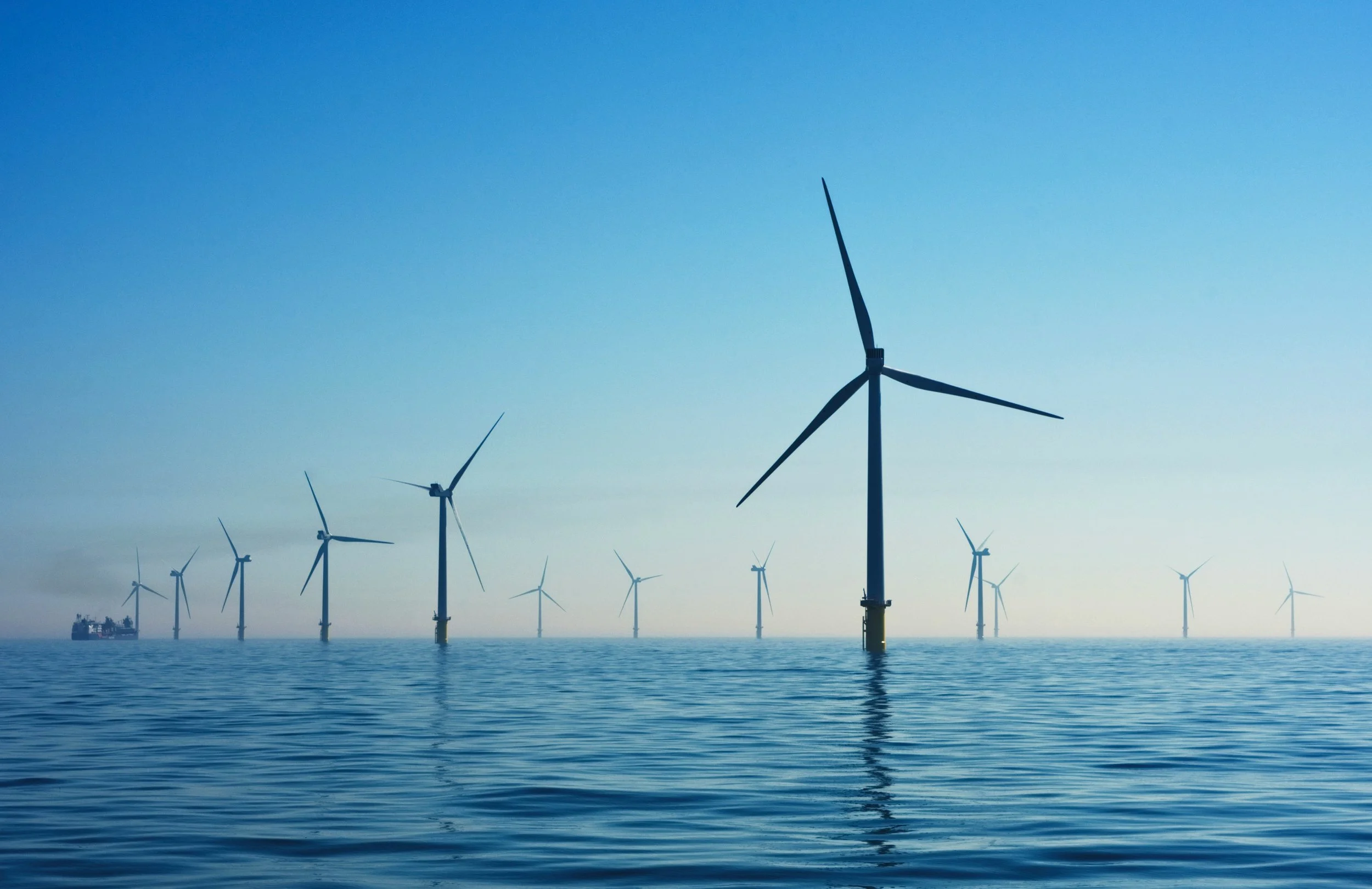
Proponents of offshore wind staffed at least three different booths: the Offshore Wind Alliance (OSWA), Power Up Maryland, and the Maryland Energy Administration.
Conversations at the OSWA booth were either supportive of Maryland’s effort to add offshore wind to the state’s power mix, or curious about lawsuit activity.
At this time, the federally approved construction and operations plans for the wind projects in Maryland have not changed, and lawsuits continue through the courts.
The OSWA also provided handouts compiled internally or by partner organizations like the National Wildlife Federation and the Audubon Society, to combat misinformation concerning bird, whale, and recreational and commercial fishing impacts touted by opponents.

“It was heartening to see just how many people were interested in adopting offshore wind in Maryland, and how interested they were in factual, science based information,” Brian Gilliland, Eastern Shore Clean Energy Organizer for Maryland LCV, said. “Attendees of MACo are savvy to the appeals to emotion and blatant misrepresentation our opponents rely on.”
A major concern looming over the conference was the advent of data centers, and the vast amount of resources needed to support and maintain them.
“Data centers are very large, energy-intensive facilities that can pose risks to the natural environment, public health, and electricity rates for Maryland families unless protective actions are taken.” Rebecca Rehr, director of climate policy and justice for Maryland LCV said. “It’s interesting to be at MACo talking about both data centers and offshore wind, because it’s critical that data centers pay for their own energy and offshore wind provides a huge potential to meet that demand from a clean, reliable source.”

Rehr was also a panelist for a standing-room only data center panel discussion during the conference.
Michael Freeman, Federal Affairs Director at the Oceantic Network — a partner in the alliance — helped staff OSWA’s booth at MACo.
“It was really interesting to me how representatives from throughout the state wanted to know how they could help, or what options they had to support offshore wind in Maryland. The need is there, the support is there. We need to convince Ocean City the sky won’t fall after turbines are installed 10 miles offshore,” Freeman said. “People love Ocean City, myself included, and will continue to love and visit it well after the project is complete.”
While it may have been treated as an issue between Ocean City, its parent county of Worcester and the federal administration in the past, Maryland officials from outside the area seem ready to come together on a solution of benefit to everyone in the state.
“I think we had a lot of support, and there was more than one person who seemed to be coming around to the idea of offshore wind. The electricity and resource needs are real problems for Marylanders, and these problems need solutions,” Gilliland observed. “Offshore wind in Maryland is a shovel-ready project offering a real solution to a real need in the state.”